
Vi-CELL BLU
Automatisierte Bestimmung der Zellzahl, Zellkonzentration und Zellvitalität
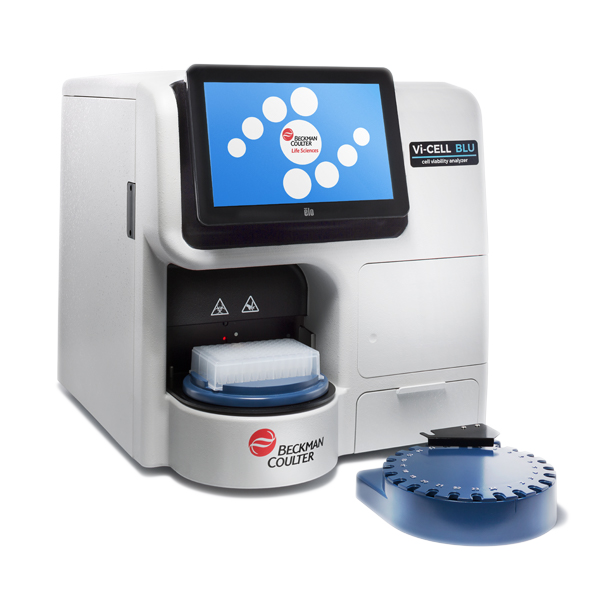
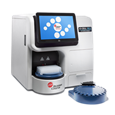
Der Vi-CELL BLU setzt neue Maßstäbe in der Bestimmung der Zellzahl, Zellkonzentration und Zellvitalität. Mit nur 200 µl Probenvolumen bietet der Vi-CELL BLU schnelle und reproduzierbare Zellanalysen mittels der Standard-Trypanblau-Methode und modernster digitaler Bildanalyse. Der weltweit einzigartige Wechsel zwischen einer Mikrotiterplatte und einem 24-Positionen-Karussel vereinfach die Messung der Zellzahl, Zellkonzentration und Zellvitalität für Hochdurchsatzlabore signifikant.
Der Vi-CELL BLU automatisiert die Zellanalyse durch automatische Probennahme, über die Anfärbung der Zellsuspension bis hin zur Messung und Reinigung.
- Einzigartiger Wechsel zwischen Karussell und Mikrotiterplatte
- Nur 200 µl Probenvolumen
- Unterstützt 21 CFR Part 11 Konformität
- Maximale Bildanzahl: 100
- Integrierter Windows 10 Computer
Vi-CELL BLU Anwendungshinweise
- Guidance on Migration from Vi-CELL XR to Vi-CELL BLU
- Matching Cell Counts between Vi–CELL XR and Vi–CELL BLU
- Vaporized Hydrogen Peroxide Decontamination
- Avoid the Pitfalls When Automating Cell Viability Counting for Biopharmaceutical
Sie möchten sehen wie der Vi-CELL BLU funktioniert? Besuchen Sie die Vi-CELL BLU Videogalerie
Entdecken Sie, wie der Vi-CELL BLU Analyzer Ihnen hilft, von Messungen zu Erkenntnissen zu gelangen



Product Overview
Vi-CELL BLU Eigenschaften
Effiziente und schnelle Analyse von Zellzahl und Zellvitalität
- Exakt reproduzierbare Messergebnisse
- Probenvolumen: 200 µl
- Messzeit: 130 Sekunden
- Messbereich: 2 µm - 60 µm
- 21 CFR Part 11 konform: Ja
- Maximale Bildanzahl: 100
Integrierter Computer mit intuitiver Software
- Darstellung von Anzahl-, Konzentration- und Größenverteilung
- Ermittlung der Zellvitalität (absolut, % und Zellen /ml)
- Ermittlung der Aggregatsanzahl und Aggregatsverteilung
Validierung und Zertifizierung zur Einhaltung von Sicherheitsstandards
- Unterstützt 21 CFR Part 11 Konformität
- Audit-Trail und Passwortschutz
- Sicherheitsstufen und elektronische Unterschrift
- V-Check Programm für SQ, DQ, IQ, OQ
Zellzählung mit automatischer Trypan-Blau-Methode
- Automatisierte Anfärbung und Messung der Zellsuspension
- Automatisierte digitale Bildanalyse für die Bestimmung der Zellzahl, Zellkonzentration und Zellvitalität
- Analyse von mehr als 15.000 Zellen möglich
- Karussell oder Mikrotiterplatte ermöglichen kontinuierliche Messungen
Vi-CELL BLU Insights and Resources
Key Features and Benefits
Discover the automation, accuracy, and data analysis capabilities that make the Vi-CELL BLU Cell Viability Analyzer a reliable solution for cell counting and viability testing.
Explore FeaturesFrom Data to Insights
Learn how the Vi-CELL BLU analyzer transforms cell count and viability measurements into meaningful insights that support informed decision-making.
Learn How It WorksCell Type Guidelines
Explore validated cell type settings and recommended configurations to help optimize performance across a range of cell-based applications.
View Cell Type Guidelines21 CFR Part 11 Compliance
Explore the Vi-CELL BLU 2.0 software features that help improve data integrity, traceability, and regulatory readiness.
Explore Compliance Features
Comparable Data
Maintain continuity with historical datasets and established workflows.

Support for GMP-Aligned Workflows
User controls and reporting features support regulated environments.

Flexibility Across CLD, PD, and QC
Advanced cell analysis supports CLD, PD, and QC workflows.

Reliable Performance, Familiar Hardware
Built on proven Vi-CELL BLU hardware without requiring changes to existing instrument.

Explore Vi-CELL BLU Models
Related Parts




How the Vi-CELL BLU Cell Viability Analyzer works

FIRST STEP
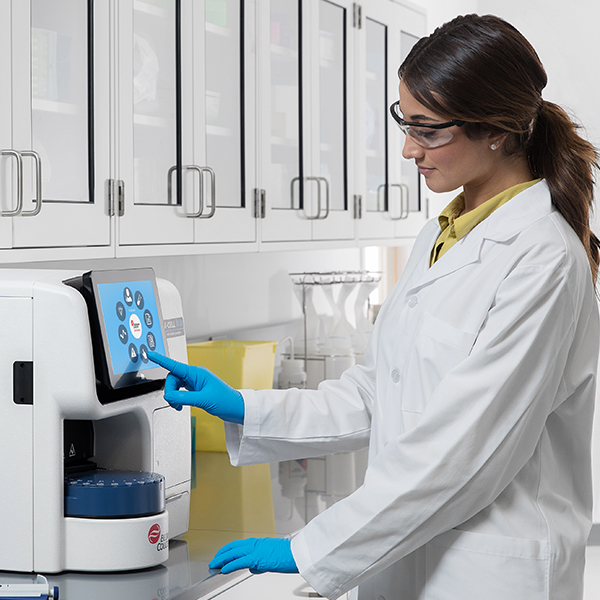
Log in and add sample(s) to the run queue

NEXT
Review results

ALTERNATIVELY
Walk away to work on other tasks and retrieve results later
Work with Carousel or Plate

With Carousel
Remove carousel to access plate holder

With Plate
Place 96-well plate onto the plate holder
Technische Dokumente
FAQ on Vi-CELL BLU Cell Viability Analyzer
What are viable cells?
Viable cells are live, healthy cells in a sample. In cell viability assays, viable cells are typically assessed by indicators such as intact cell membranes, cellular function, enzymatic activity, or metabolic activity. In the context of trypan blue, viable cells are live cells with intact membranes and sufficient cellular health to support downstream culture, analysis, or processing decisions. Cell viability measurements help researchers understand the quality and health of a cell population before moving forward with experiments or bioprocessing steps.
How does trypan blue work?
Trypan blue works through a dye-exclusion principle. Viable cells have intact cell membranes that exclude the dye, so they remain unstained, while non-viable cells have compromised membranes that allow trypan blue to enter, making them appear blue. This makes trypan blue a widely used method for distinguishing live cells from dead cells during cell counting and viability analysis.
The Vi-CELL BLU Cell Viability Analyzer automates the trypan blue dye exclusion method, helping reduce manual microscopy, pipetting, and hemocytometer-based workflows.
Does the Vi-CELL BLU Cell Viability Analyzer support regulatory compliance?
Yes. The system includes data integrity and compliance features such as audit trails, electronic signatures, secure user sign-on, user-level permissions, and tools that support 21 CFR Part 11 compliance requirements.
Can the Vi-CELL BLU Cell Viability Analyzer support high-throughput workflows?
Yes. The system offers flexible sample introduction through a 24-position carousel or a 96-well plate format, making it suitable for both routine laboratory workflows and higher-throughput applications. It also supports integration with automation platforms.
Can I compare results with historical data with the Vi-CELL BLU 2.0 software?
Yes. The Vi-CELL BLU 2.0 software is designed to support a seamless transition with improved alignment to historical data, helping laboratories maintain data comparability while benefiting from enhanced accuracy and performance.
Does the Vi-CELL BLU Cell Viability Analyzer integrate with automated bioprocessing systems?
Yes. The Vi-CELL BLU Cell Viability Analyzer can be integrated with automation and bioprocessing platforms, including Sartorius Ambr® systems, Biomek automated workstations, and the Flownamics Seg-Flow S3 automated sampling system, helping streamline cell culture workflows.
